

It started like many Nigerian legal stories do — quietly, until thunder struck in court. A few female corps members challenged a decades-long NYSC policy banning skirts as part of the official uniform. The reason? It allegedly violated their religious and moral beliefs.
The court agreed.
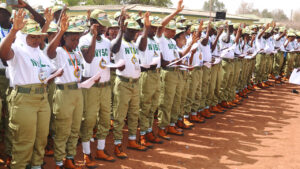
Yes, a Federal High Court ruled that the NYSC has no legal grounds to force female corps members to wear trousers, especially when it infringes on their constitutional rights. Translation? Hijabs, skirts, religious garments — all might now be legally acceptable in a scheme previously known for its strict uniformity.
But now that the skirt has made it to camp — what next?
A Dress Code In Crisis?
Let’s be honest. The NYSC has always been about discipline, unity, and uniformity. The uniform — khaki trousers, jungle boots, and the olive green shirt — was almost sacred. You dared not modify it, lest you be humiliated or denied clearance.
But this ruling changes the entire game.
The court, in its judgment, didn’t just order the NYSC to allow skirts. It also demanded that certificates be issued to previously punished corps members who were refused discharge for refusing to wear trousers.
That’s not just a fashion statement. That’s a constitutional mic drop.
Freedom Of Religion vs National Unity: Who Wins?
Here’s where it gets tricky — and controversial.
What happens when national institutions enforce a dress code that contradicts someone’s deeply held religious beliefs? Should religious rights end at the camp gate?
Supporters of the ruling argue that freedom of expression — and religion — must be respected even in national programs. “You cannot preach national unity by erasing personal identity,” says Halima, a Muslim lawyer in Abuja. “If a skirt doesn’t stop me from serving my country, why ban it?”
Opponents say this is a dangerous precedent. “Today it’s skirts. Tomorrow it’s everyone customizing their uniform with tribal prints or leather jackets. NYSC will become a costume carnival,” says a retired NYSC official who requested anonymity.
The Real Issue: Control Or Culture?
This case isn’t just about fabric. It’s about control — who gets to define Nigerian identity. Is the NYSC about unity at all costs, or unity with respect?
For years, many female corps members have faced humiliation, delay in mobilisation, or outright discharge for refusing to wear trousers. Some are Christians from conservative denominations, others Muslim women with hijab and long skirts as part of their dress code.
In most cases, they were treated as rebels.
But who was really rebelling? The corps members asking to be allowed to serve while keeping their faith intact — or an institution too stubborn to update its 1973 handbook?
What NYSC Hasn’t Said (Yet)
As of now, the NYSC is keeping very quiet. No official statement. No updated guidelines. Nothing.
Silence can mean two things: strategy or shock.
Some insiders claim the NYSC will appeal the ruling. Others say they’re waiting for instructions from the presidency or the Ministry of Youth. But here’s the uncomfortable truth: this case has opened Pandora’s box.
Also Read: Skirts Vs Trousers: Has The NYSC Been Silently Violating Women’s Rights All Along?
And inside it is every suppressed cry from corps members forced to choose between their beliefs and their discharge certificate.
Can Nigeria Handle Diversity In Uniform?
Uniforms are meant to unify. But can they do so without erasing identity?
This case has shown the cracks in Nigeria’s post-colonial institutions — cracks filled with questions we’ve avoided for decades:
* Can a Christian corper wear skirts while marching?
* Can a Muslim woman don a full hijab and still be posted to a Catholic school?
* Can religious freedom survive inside a paramilitary camp?
The court ruling says yes.
But will the streets agree?
A Dress Code Revolution In The Making?
From Lagos to Jos, WhatsApp groups are buzzing. Corps members are already asking:
“Can I now wear my own version of the uniform?”
“Does this mean I can serve with a skirt next batch?”
“Is NYSC still mandatory if they don’t respect my rights?”
What started as a simple skirt case is now a full-blown conversation about religious expression, constitutional rights, gender norms, and how much power the Nigerian state should wield over the individual.
This is not just a legal victory. It’s a cultural shift. A fashion revolution. A moral question wearing olive green boots.
Is The NYSC Ready For 2025?
NYSC was created to heal a broken Nigeria after the civil war. But decades later, are we ready to let young Nigerians express who they are while serving the nation?
If we want a better Nigeria, we must embrace the reality of diversity. That includes diversity in dress, in religion, and in thinking.
Maybe the future of national service isn’t about dressing the same — but respecting what makes us different.
The skirt has spoken. Nigeria is watching.